NDB — THE CONTROL CASE
One SME. One Crisis. One Relief Framework. A Different Banking Response.
NDB is included in this Case Study not to praise one bank or condemn another, but for a more important reason:
NDB provides the control against which implementation can be tested.
The enterprise was the same.
The economic crisis was the same.
The distress was the same.
The CBSL relief objective was the same.
Yet the outcome was different.
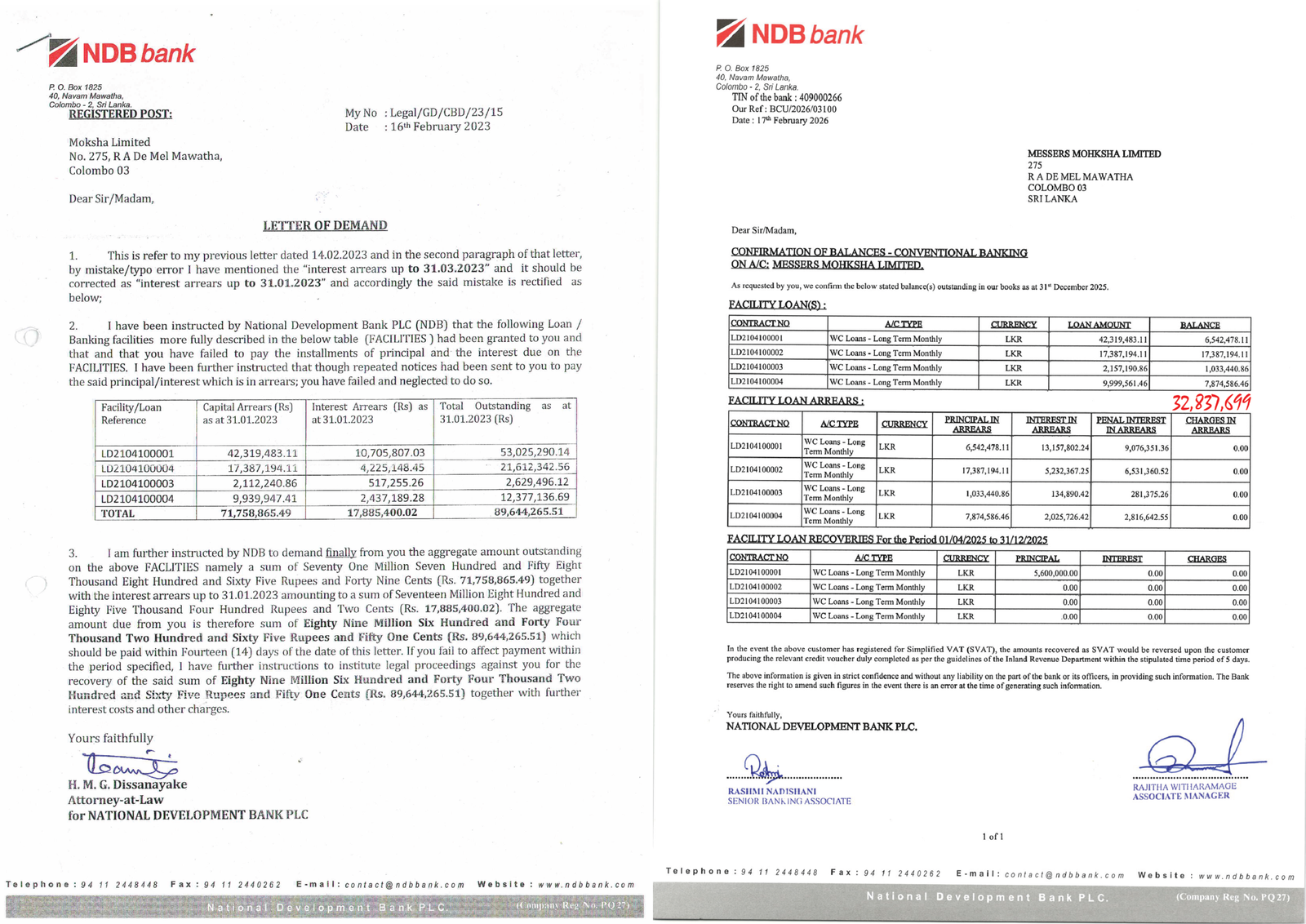
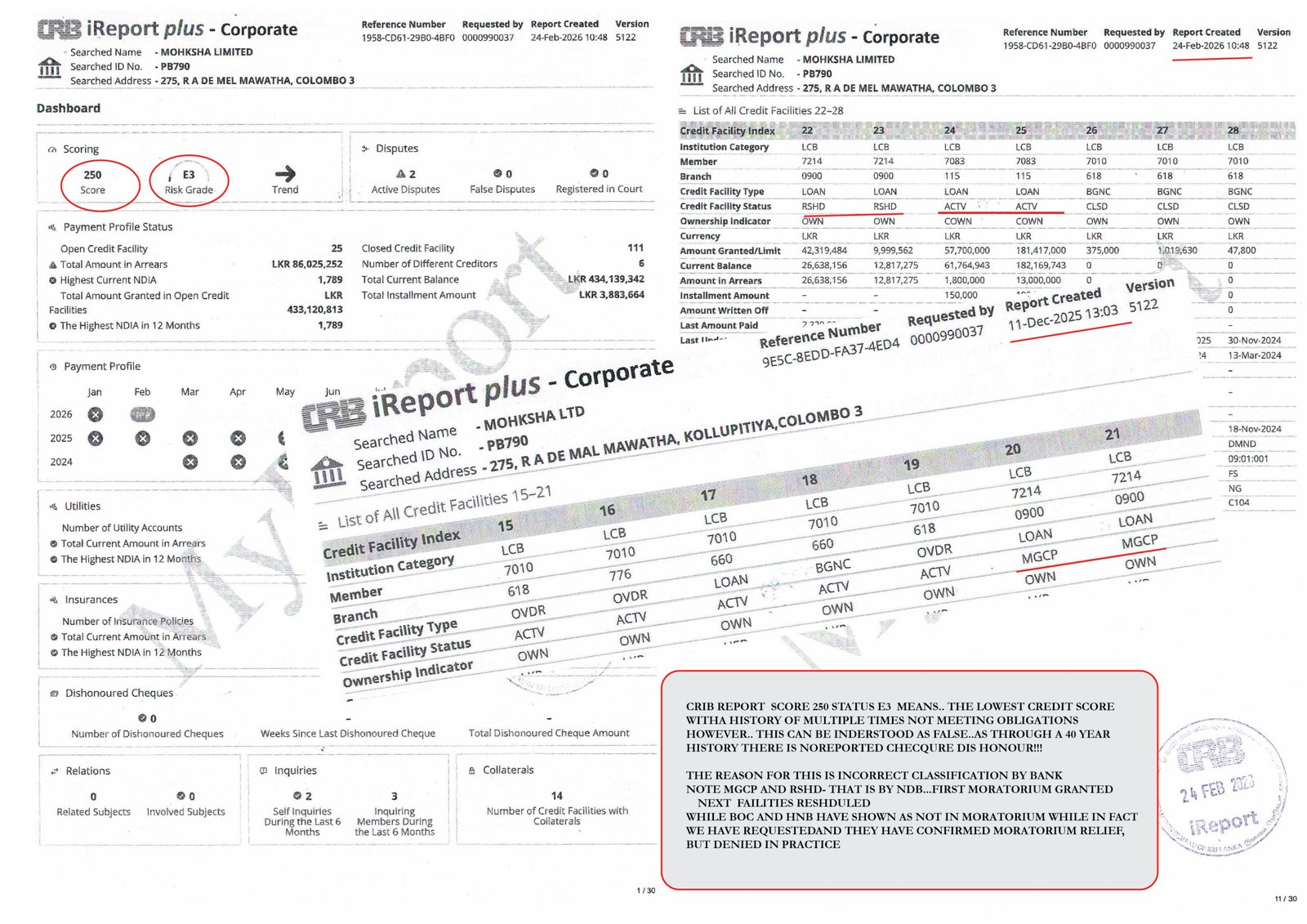
NDB recognised the moratorium pathway, reflected the appropriate MGCP/RESH treatment, subsequently restructured the facilities, credited repayments made by the enterprise, and produced an account position from which the movement towards the closing balance can be followed.
The later NDB confirmation at 31 December 2025 shows the remaining balances after payments/deposits made to the Bank. The approximately Rs.2.1 million interest component appears consistent with interest arising after the relevant relief period at the applicable rate, subject to NDB’s confirmation.
But the importance of these documents goes far beyond NDB.
They demonstrate that an SME experiencing distress need not automatically become an adversary of its bank.
**RELIEF DID NOT MEAN FORGIVENESS.
RESTRUCTURING DID NOT MEAN ESCAPING REPAYMENT.
A DISTRESSED CRIB DID NOT MEAN THE ENTERPRISE HAD TO BE ABANDONED.**
NDB’s records show another possible banking behaviour:
Recognise the crisis → apply the relief pathway → classify appropriately → restructure → credit repayments → establish the balance → allow the enterprise to continue.
There were difficulties. There were arrears. There was even a Letter of Demand.
But importantly, the documentary trail remained capable of being followed.
THE BANK COULD PROTECT ITS MONEY WITHOUT LOSING SIGHT OF THE ENTERPRISE.
That is why NDB matters to this Case Study.
It creates a legitimate question for the independent reviewer when examining the conduct of the other lenders:
IF ONE BANK COULD WORK WITH THE SAME SME THROUGH THE SAME NATIONAL CRISIS UNDER THE SAME REGULATORY ENVIRONMENT, WHY DID THE OTHER BANKING RELATIONSHIPS PRODUCE SUCH DIFFERENT OUTCOMES?
Was the difference in the policy?
Was it in eligibility?
Was it in the borrower?
Or was it simply in how individual institutions interpreted, implemented and administered the relief entrusted to them?
We offer no conclusion.
**THE DOCUMENTS ARE THE WITNESSES.
THE THREE BANKS ARE THE COMPARISON.
THE INDEPENDENT REVIEWER SHOULD DECIDE.**
**GOOD BANKING IS NOT ONLY ABOUT RECOVERING A LOAN.
IT IS ALSO ABOUT PRESERVING THE CAPACITY TO REPAY IT.**